> For the complete documentation index, see [llms.txt](https://docs.startdeliver.io/llms.txt). Markdown versions of documentation pages are available by appending `.md` to page URLs; this page is available as [Markdown](https://docs.startdeliver.io/use-cases/use-case-automated-csm.md).
# Use case: Automated CSM
The best CSMs don't succeed because they work harder than everyone else. They succeed because they spend their time on the right things.
**The situation**
Ask a CSM how they spend their week and the answer is rarely "building customer relationships and driving strategic value." It's closer to: writing follow-up emails after calls, updating CRM fields, chasing customers for overdue tasks, manually checking which accounts haven't been contacted recently, preparing slide decks for Business Reviews, logging meeting notes, triaging their task list, figuring out which of their 70 accounts needs attention today.
This is the work around the work. It's necessary in the sense that it needs to get done. But none of it is what a great CSM was hired to do. None of it is what customers value. And all of it consumes the time and mental energy that should go toward understanding customers deeply, having meaningful conversations, and making the decisions that actually move relationships forward.
The volume problem makes this worse. As CS teams scale, individual CSMs take on more accounts. The administrative burden grows proportionally. The time available for genuine customer engagement shrinks. And the quality of CS — the thing that actually drives retention and expansion — quietly degrades while the metrics look fine.
***
**The approach**
The goal of automation in CS is not to replace the CSM. It is to remove everything that isn't genuinely CSM work so the CSM can do what only a human can do — build trust, exercise judgment, navigate complexity, and have the conversations that matter.
Great CS is relationship-intensive. It requires knowing your customer's business, understanding their pressures, reading the room in a call, and knowing when to push and when to hold back. None of that can be automated. All of it requires a person who has the time and mental space to actually show up.
What can be automated is everything else. The preparation that happens before every meeting. The follow-up that should happen after every meeting. The monitoring that should be happening continuously across every account. The nudges that should go to customers when tasks slip. The alerts that should reach CSMs when signals change. The routine touchpoints that should happen on a consistent rhythm regardless of how busy the CSM is.
When the routine work runs automatically, the CSM becomes genuinely strategic. Not because they try harder — because the system handles everything that doesn't require them, leaving them free for everything that does.
***
**How to do it in Startdeliver**
**Eliminate meeting prep**
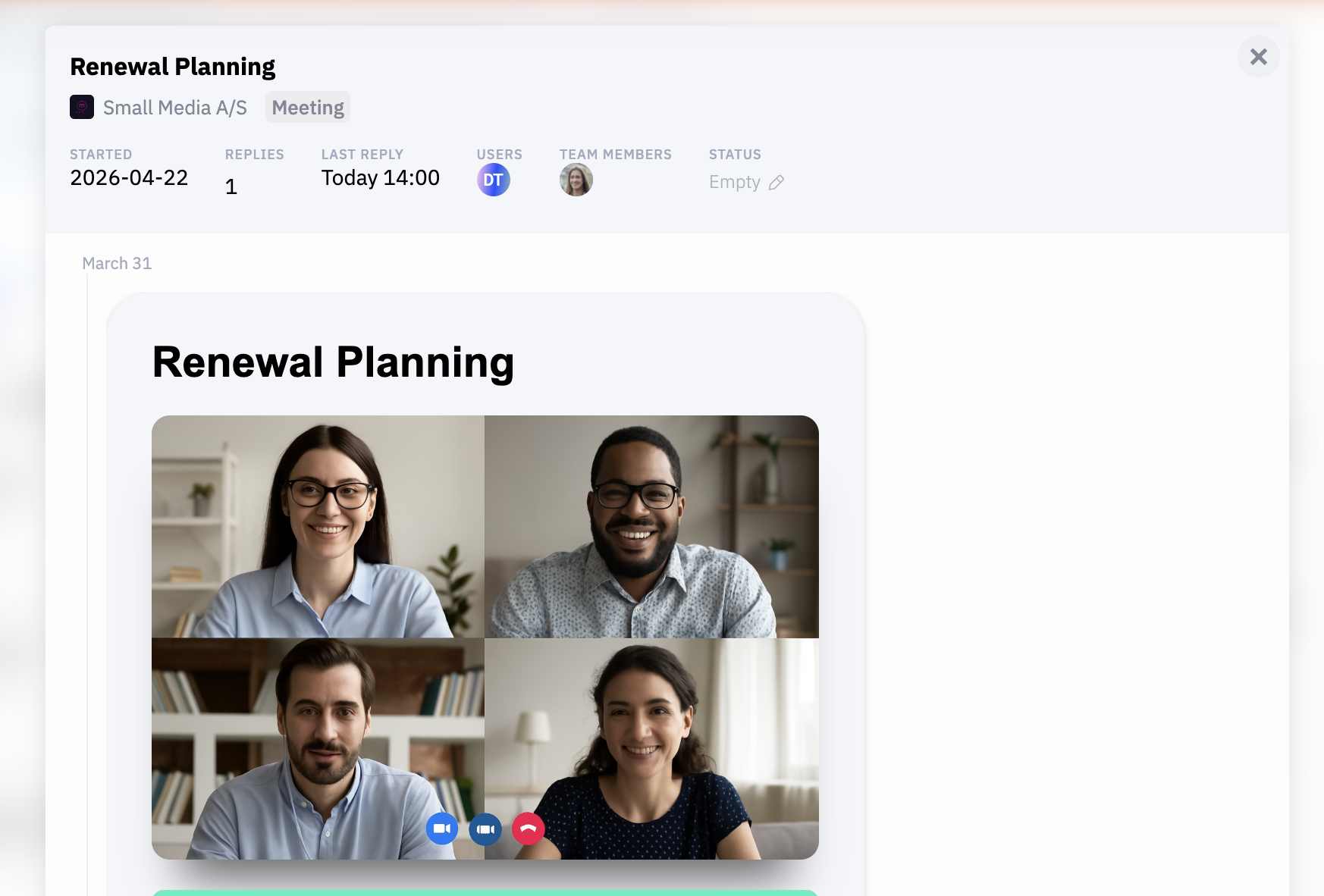
Before every customer call, the AI Assessment gives your CSM a current read on the account — what's changed since the last conversation, what the health signals show, what the recommended action is, and where the customer stands against their goals. There's no need to dig through notes, pull a usage report, or check the support queue manually. The full picture is on the customer profile, updated in real time.
The CSM walks into the call informed. Not because they spent 30 minutes preparing — because the platform prepared for them.
→ [How health assessment works](/health-and-metrics/how-to-set-up-health-metrics-and-assessment.md) · [AI Assessments](/jecta-agent-and-ai/ai-assessments.md) · [Customer Goals & Success Plans](/managing-customers/customer-goals-and-success-plans.md)
**Automate meeting follow-up**
After a call, the CSM adds their notes to the customer profile. From there, automations handle the follow-up: a summary email to the customer, a task created for each commitment made, a reminder scheduled for the next check-in. The post-meeting admin that used to take 20 minutes happens automatically in seconds.
Meeting notes also feed the AI — every interaction becomes part of the relationship context the AI reads when producing the next assessment.
→ [Automations](/managing-customers/automations.md) · [Ongoing — Your actions](/managing-customers/ongoing-your-actions.md)
**Run onboarding on autopilot**
Onboarding is the most process-intensive part of the customer lifecycle — and the most automatable. A project template defines every step. Automations trigger each phase at the right moment. Shared Space keeps the customer informed and accountable for their tasks without the CSM having to chase. Jecta handles the routine touchpoints — welcome messages, milestone acknowledgments, overdue task reminders — so the CSM focuses on the conversations that need a human.
A CSM running automated onboarding can manage three times the onboarding volume of one running it manually — at the same or higher quality.
→ [Templates & projects](/platform-settings/templates-and-projects.md) · [Automations](/managing-customers/automations.md) · [Jecta: AI Agent](/jecta-agent-and-ai/jecta-ai-agent.md) · [Setting up Shared Space](/managing-customers/shared-space/setting-up-shared-space.md)
**Let the platform prioritize for you**
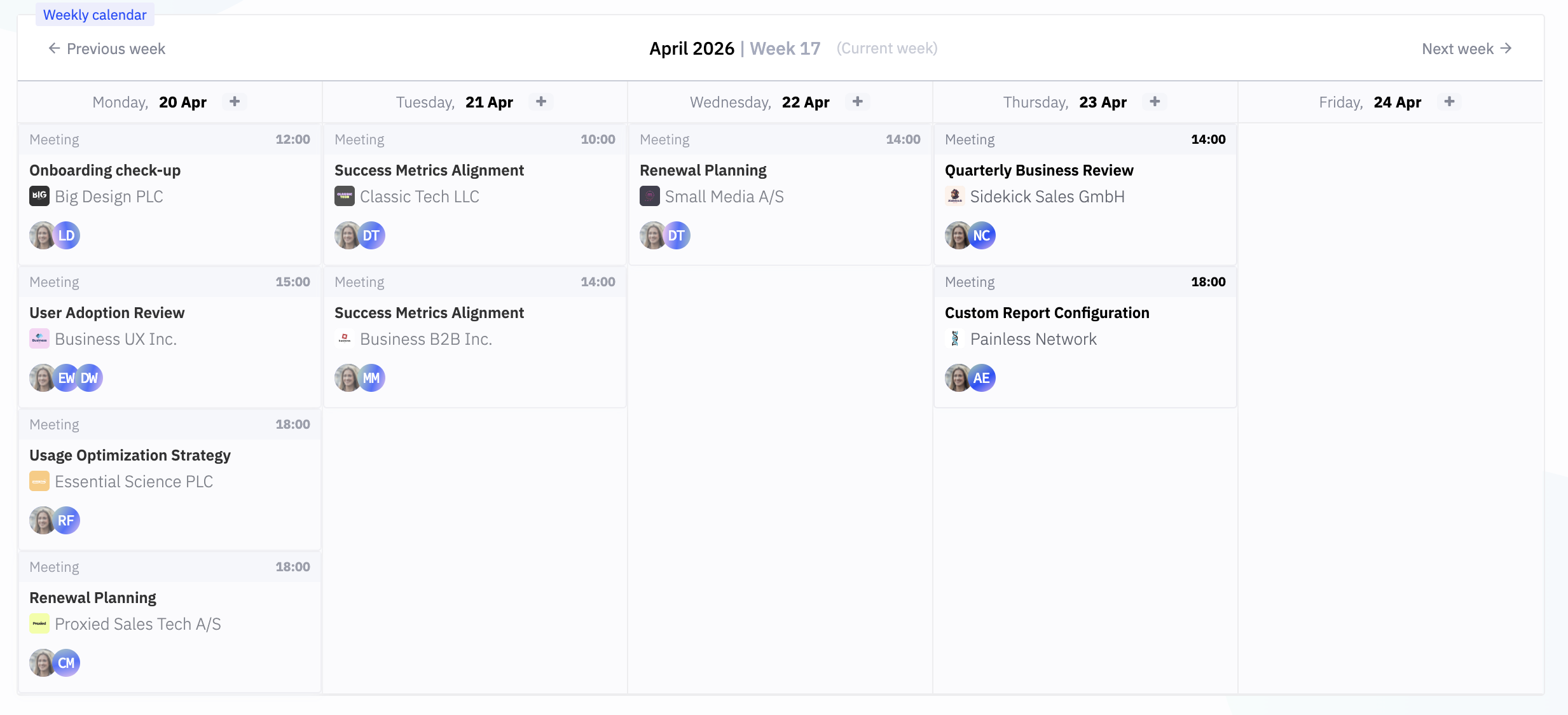
Every morning, the CSM opens Ongoing and sees their task list, sorted by priority. The AI has already flagged which accounts changed status overnight. The At Risk list shows which customers need attention. The Calendar shows which calls are happening today. The Conversations tab shows which customers have replied and are waiting for a response.
The CSM doesn't spend 20 minutes figuring out where to start. The platform tells them.
→ [Ongoing — Your actions](/managing-customers/ongoing-your-actions.md) · [AI Assessments](/jecta-agent-and-ai/ai-assessments.md)
**Never miss a signal**
Startdeliver sends notifications when early risk signals arrive — a drop in usage, a poor survey response, a support ticket going overdue, a customer who has gone quiet. These arrive before the problem becomes visible in a conversation. The CSM gets a heads-up when something changes, not a crisis when it's too late.
Combined with automations that create tasks and send touchpoints when signals appear, the monitoring work that used to require manual weekly reviews happens continuously and automatically.
→ [Automations](/managing-customers/automations.md) · [How health assessment works](/health-and-metrics/how-to-set-up-health-metrics-and-assessment.md)
**Let Jecta handle what doesn't need a human**
Jecta is the autonomous CS agent that runs the work between human touchpoints. It reaches out to customers who have gone quiet. It sends check-ins at the right moments. It follows up on overdue tasks. It manages Shared Space updates. It handles the touchpoints that should happen consistently across every account — and escalates to the CSM when something genuinely needs human judgment.
The result is that every customer gets consistent, timely attention regardless of how many accounts the CSM is managing. Jecta handles the volume. The CSM handles the relationship.
→ [Jecta: AI Agent](/jecta-agent-and-ai/jecta-ai-agent.md)
**Free up strategic capacity**
When the routine work is automated, the CSM has capacity for the work that actually drives outcomes — deep customer conversations, strategic account planning, proactive expansion discussions, Business Reviews that are genuinely consultative rather than just status updates. This is where great CSMs create value. This is what automation makes possible.
***
**What good looks like**
* CSMs start every day knowing exactly which accounts need attention and why — without manually reviewing their full portfolio
* Meeting prep takes 2 minutes instead of 30 — the AI Assessment surfaces everything relevant to the call before it happens
* Post-meeting follow-up is handled automatically — tasks created, emails sent, next check-in scheduled — without the CSM touching a keyboard
* Onboarding runs on a defined process for every customer regardless of how many onboardings are in flight simultaneously
* No customer goes dark because a CSM was too busy — Jecta maintains the touchpoint rhythm across the full portfolio
* CSMs spend the majority of their week on customer conversations and strategic work — not on administrative tasks, data hygiene, or figuring out where to focus
* Retention and expansion improve not because CSMs work longer hours but because they spend their hours on the things that actually matter